Wednesday, November 26, 2014

To Everything There Is A Season

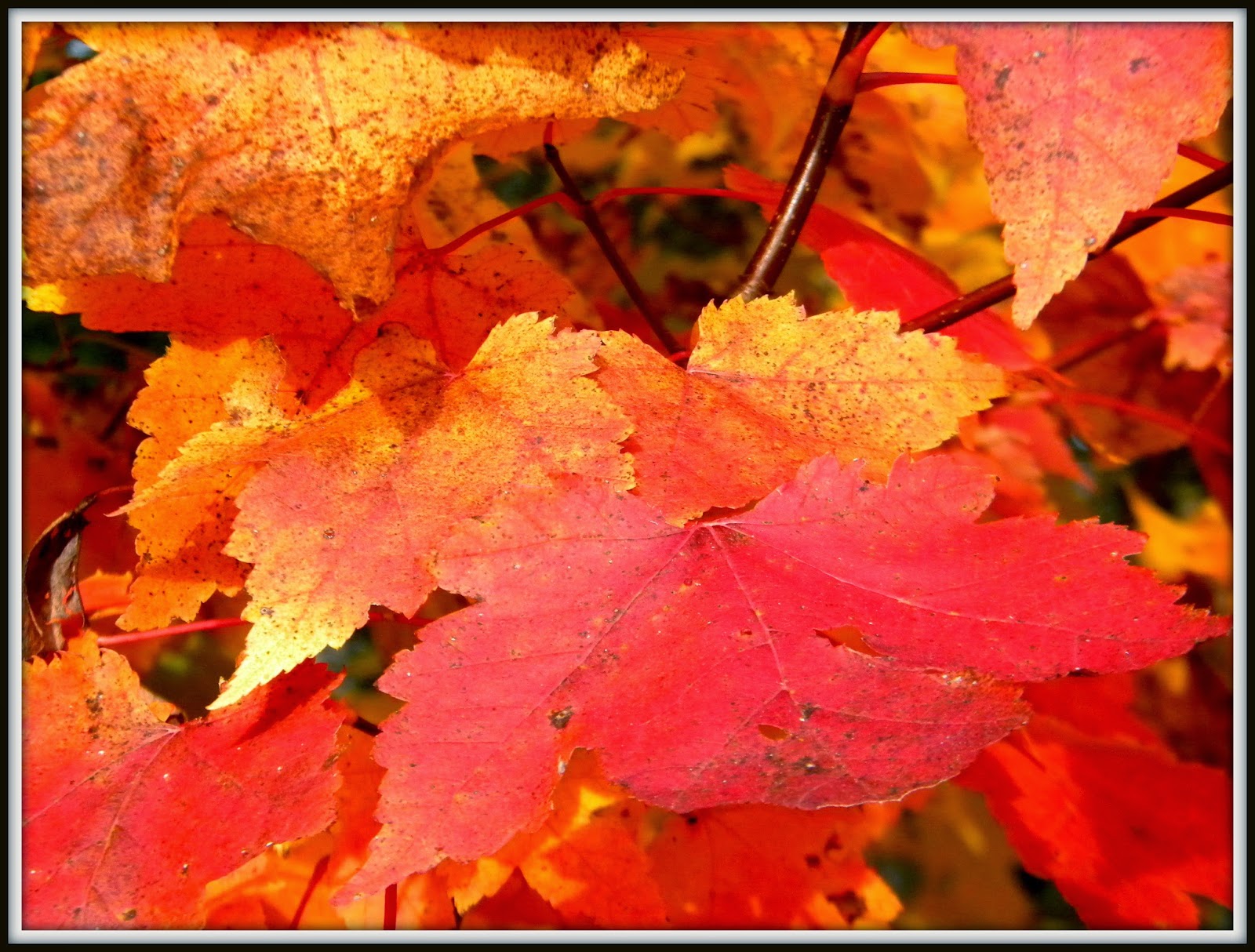
This time of the Thanksgiving season, I wanted to share with you a song that brings to mind the fall or harvest season for me.


I don't know why this song makes me think of fall. Maybe it came out in the fall the first time I heard it.

After doing a little research on Wikipedia- I was absolutely correct. This song by The Byrds was #80 on the charts in October 1965, and was #1 by December 1965. The song was written by Pete Seeger in the late 1950's


The song is "Turn, Turn, Turn" by the Byrds. It is also known as "To Everything There Is A Season". The lyrics, except for the title which is repeated throughout the song, and the final verse of the song, are adapted word-for-word from Chapter 3 of the 
Book of Ecclesiastes in the Bible.


This video clip is from one of the Byrds' performances.


I'm sure this has probably been done several times before, but thought I would add my interpretation in photos to this song.


To everything there is a season,


and a time for every purpose under heaven:


a time to be born, 


and a time to die;


a time to plant,


 and a time to pluck up that which is planted;


a time to kill, and a time to heal; 


a time to break down, and a time to build up;


a time to weep, and a time to laugh;


a time to mourn, 


and a time to dance;


a time to cast away stones, 


and a time to gather stones together;


a time to embrace, 


and a time to refrain from embracing;


a time to seek, and a time to lose;


a time to keep, and a time to cast away;


a time to rend, and a time to sew;


a time to keep silence, and a time to speak;


a time to love, and a time to hate;


a time for war,


 and a time for peace.


The King James Bible
Ecclesiastes 
Chapter 3, Versus 1-8


In the spirit of Thanksgiving, I hope you can embrace with loving kindness the many gifts you have received in your life. Maybe, if possible, you could give back a little something by giving a donation to your local food pantry or soup kitchen. The work that these groups do for the community is so necessary and they can always use your help.

May you be truly blessed this season with health, love, and happiness.


Thanks for visiting-
feel free to comment.

Tuesday, November 18, 2014

The Story Begins

And so the story begins. Or maybe I should say Chapter. Right, the Chapter begins. It's not a new story. As a matter of fact it's the same old story. That story would be "Winter". Or Tales of Winter. Or maybe just Snow. Yeah, lots of snow. Probably.


I mean winter doesn't officially start until December 21st. Here it is the middle of November and most of the country has had very cold temperatures. We had our first measurable snowfall of the season. We got about 5 inches last week, but so far the storm that is now in the area has left its mark on northern and western New York. The Fort Drum Military Base in Watertown, NY, is closed today and so is the New York State Thruway from Rochester to the Pennsylvania state line. You know it has to be bad when the Army base closes.

But yet the calendar says it's still fall. . .


Our Indian summer is coming up early next week. Maybe. An Indian summer is when you have unseasonably warm, dry temperatures after experiencing a heavy killing frost (I don't know many people that complained about unseasonably warm temperatures in November). This usually (or sometimes) occurs between September and mid-November. Right now it's 22 degrees Fahrenheit. The weather is predicted to be maybe 60 on Monday (Nov 24). We can only hope.


Local Amish harvesting hay before the snows arrive.


Amish harvested cornstalks. When I first saw these I thought they were hay stacks.


And anything still blooming????

We still had some flowers blooming in the gardens this past week. There were a few knock-out roses that were blooming that are planted in a protected area as well as The Fairy Rose, and the dianthus were reblooming as well.

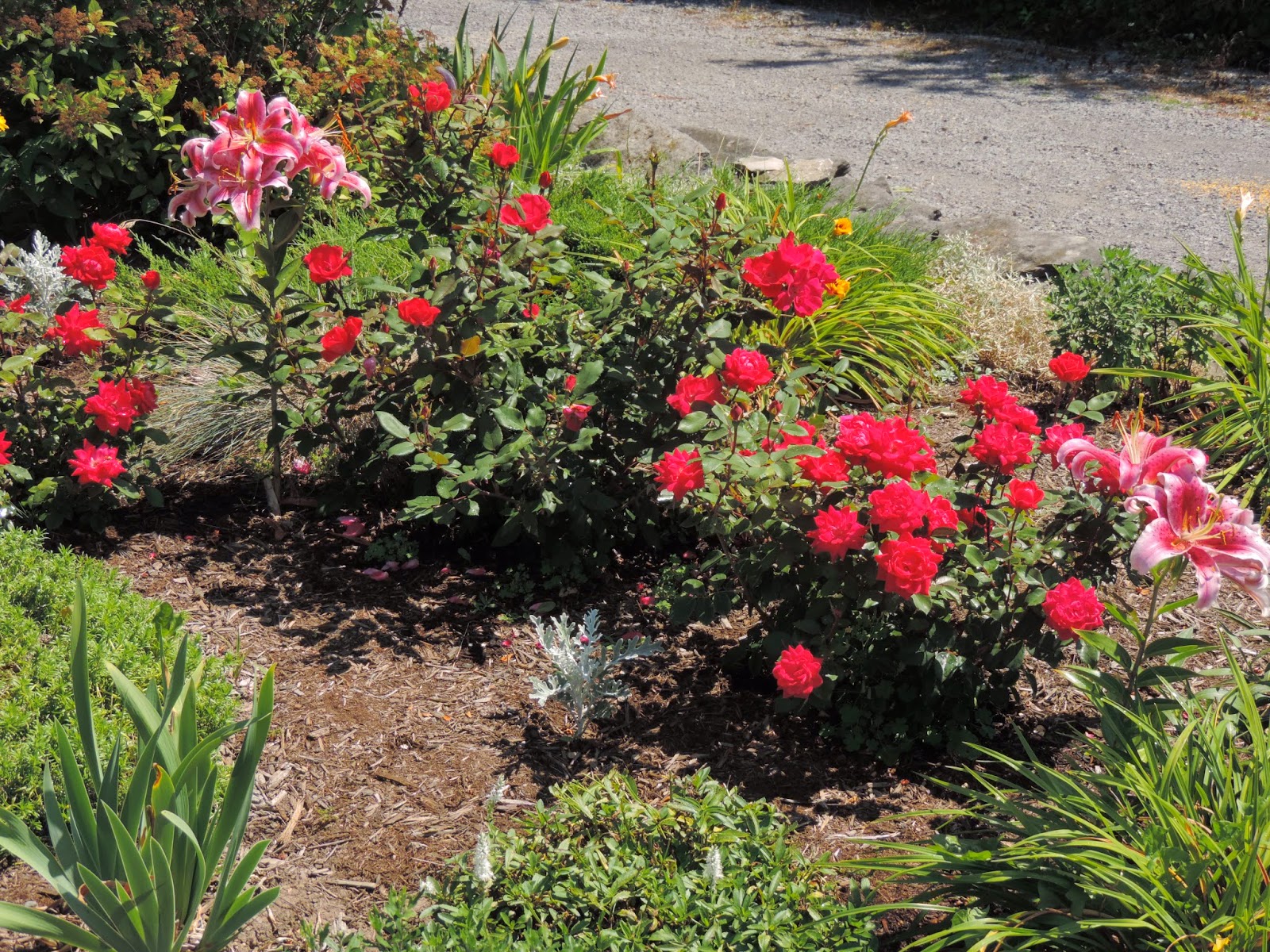
Double Knock Out Roses (right) photo taken July 2014 


Knock Out Roses. If you love roses and have not tried the knock-out roses, they might be something you might consider planting in your garden. They are so reliable, disease (mildew and blackspot) resistant, cold hardy, and bloom all season long from spring until a heavy frost. Last year because our winter was so cold and long they died back quite a bit, but after a spring pruning they were flowing a few weeks after that. They are cold hardy to zone 5 and heat tolerant throughout the US.


Knock Out Roses (photo taken July 2014)


They are available in a wide variety of colors. They grow about 3 feet wide and about 3 to 4 feet tall. The prefer full sun, and a well drained and fertile site. They should be planted about 4 feet apart for good air circulation. They are also self-cleaning, meaning you do not have to trim back the dead flowers. These roses do not have to be trimmed in any special manner either. You can trim them with the hedge trimmers. Every two or three years you might want to remove about 1/3 of the branches to stimulate new growth. Or you might want to take out some branches from the center to improve air circulation. These roses will not disappoint you. However, if you are looking for a scented rose bush you will not find it in the knock out roses.


The Fairy Rose 


The Fairy Rose Bush. The Fairy Rose bush is a miniature Polyantha shrub rose. It is about the same size as the knock out rose, but hardier. This rose bush is not scented either. I believe the knock out roses are larger flowers, but the Fairy Rose bush has larger clusters.This rose is disease resistant as well. Personally, I think the knock out roses have nicer foliage.


*     *     *    *     *     *     *     *     *     *

First snowfall. November 13, 2014


"In seed time learn, in harvest time teach, 
in winter enjoy."


Thanks for stopping by, 
and feel free to leave a comment! 
I would love to hear from you!


Friday, November 7, 2014

A Rural High School In Upstate New York

November is New York State History Month so thought I would write about some of our local history of Mexico, New York.


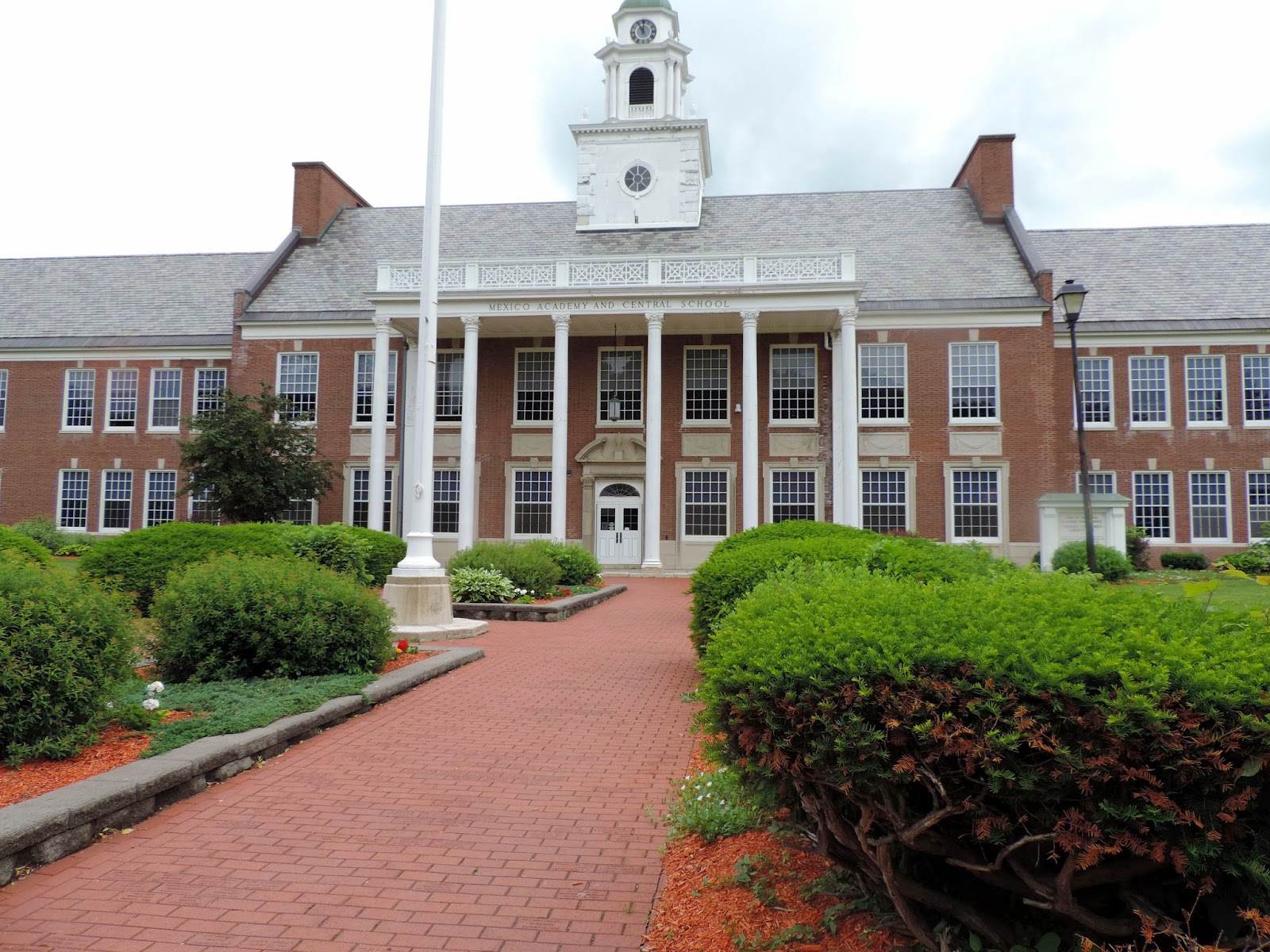
This is the Mexico High School Academy at Mexico, New York. The formal name of the school district is Mexico Academy and Central School District otherwise known as MACS.


Front Entrance
Moving to this area in 1974 was interesting for us. One consideration of our move was the school district. Our children were preschoolers at the time so we wanted to move to an area where the school district would support our educational values, and at the same time offer sufficient activities that would nurture their overall growth. We found that the school district of Mexico, New York would meet those needs.

Entrance
The Mexico Academy and Central School District consists of five school buildings: Mexico High School, Mexico Middle School, Mexico Elementary, New Haven Elementary, and Palermo Elementary. The school district has an enrollment of 2,000+ students Pre-K - 12.

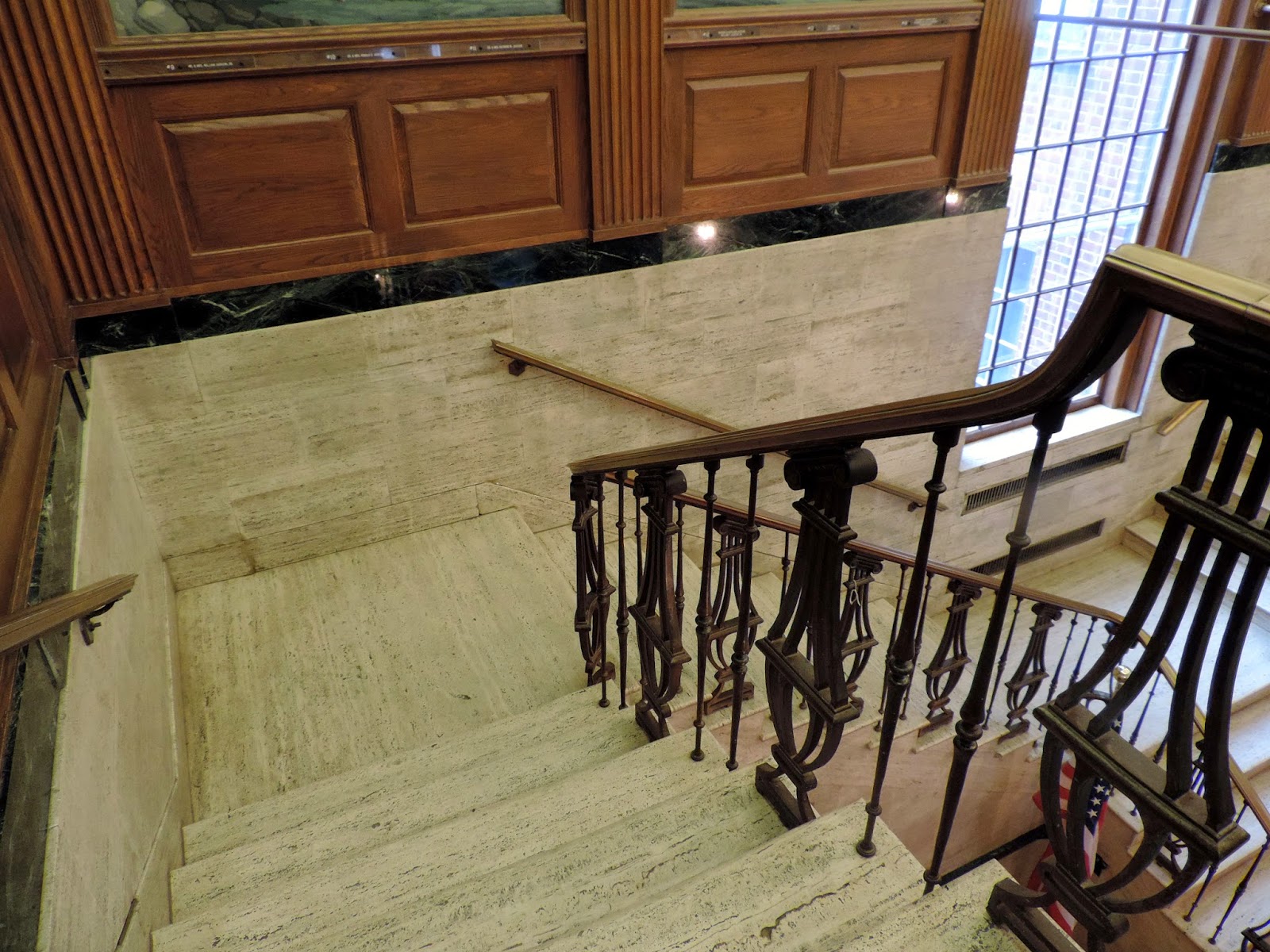
Marble staircase at entrance (Mascot- Mexico Tigers)

One of the most outstanding buildings of our Town of Mexico is the Mexico High School. The Mexico Academy was originally established in 1826, as the "Rensselaer Oswego Academy."The name was changed May 19, 1845. It's one of the oldest schools in its class in the state. It was originally a military academy and in 1893 it became a public school.

As per Wikipedia: "Mexico Academy and Central School is a historic school building located at Mexico in Oswego County, New York. It was built originally in 1927, damaged by fire in 1937 and reconstructed in 1938. It is a two story, Georgian Revival style brick building in a "U" shaped plan. It features a distinctive tower that contains an 1828 bell from an earlier building. The entry is distinguished by a two story, five bay portico supported by six Ionic columns and crowned by a Chippendale patterned balustrade.
It was listed on the National Register of Historic Places in 1991."


Looking down from staircase at the front entrance.


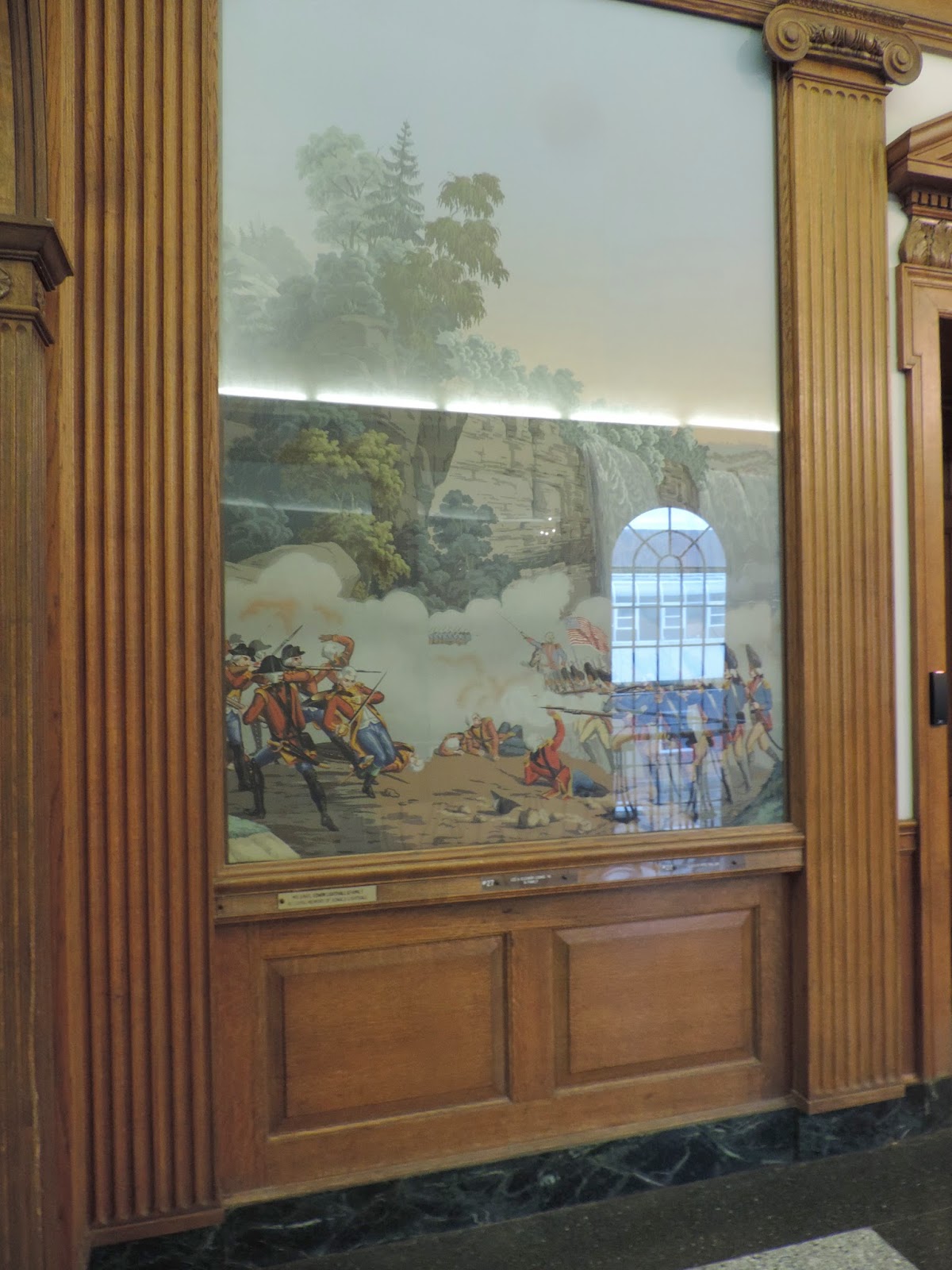
LaGuerre D'Independance. Another historic aspect of the Mexico High School was the installation of a 32 strip multicolored hand carved woodblock scene that was first printed in 1852-53. The mural consists of five scenes of the Revolutionary War. What's so unique about this mural is that there are only two sets of the entire mural and the Mexico High School has the complete set on display to the public in one room. The only other set is in the White House, Washington, D.C., but there it is on display in two rooms on separate floors. The artwork originated in France. To restore the panels for display in the school building, $25,000 was needed for this endeavor. The community, alumni, friends, and others raised all the money needed and it was all done without the need of any public school funds.


This door is the entrance to the Irene Hungerford Library. 


The Community of Mexico has a lot of pride in their school community and physical buildings. They have a lot to be proud of!

For Additional Information:
Article from CNYCentral.com: Uniquely Central NY: Mexico High School's Murals
History of the Town of Mexico, Rootsweb, ancestry (and school district)
Mexico Village Historic District: Oswego County- Mexico Village
Mexico High School: U.S. News
Wikipedia: Mexico Academy and Central School
Mexico Academy and Central School District Webpage: MACS

Mexico Academy High School (Photo taken January 2014)


Thanks for visiting the 
Mexico Academy High School! 
Hope you enjoyed your visit. 
Feel free to leave a comment.

Tuesday, October 28, 2014

Thoughts of a Garden Blogger

Ok. So this week do I select my subject from some photos or do I peruse some of my gardening magazines/books and write about a topic from those articles. I'm trying to keep my blog interesting without repetition in my articles, but sometimes there is a lot of overlap such as planting times, zone hardiness, reliable perennials, flowers for sun/shade, etc. And I do have more fall photos, but I don't want to get carried away and just post fall photos for several weeks either.

There is still a few beautiful trees with their fall foliage to be found, but now a lot of bare trees and trees with brown, dry, crinkly leaves left on them are mostly dominating the landscape.


It's so easy to get distracted when I'm writing an article. I might have to look something up on the internet and then something else piques my interest and I go off on a tangent researching that. I'm easily distracted. Especially when I'm sitting here at the computer and Facebook is running in the background ... so I check Facebook and there are some news headlines I have to read, or comment on a friend's post or picture.

Or if I'm going through photos to upload for my blog post, I come across photos of the grandkids so I have to look at all them. Then I start doing a little editing on the photos. . . and so the story goes.


Oh, and I almost forgot to mention that I'm a procrastinator. My husband, Ted, can attest to that. Actually all my family can. But sometimes good things and ideas can happen and come to me while I'm procrastinating.

Now for some garden thoughts. . .

Re-blooming daylily: Happy Returns
Label Your New Perennials. If you planted some new plants this year you might want to label them. That way when they come up in the spring you won't pull them up as weeds. A friend of mine gave me some labels once. Well, they weren't really plant labels. They were vinyl mini blinds. She had taken some old mini blinds apart and cut them up into pieces about 5" long. You can write on them with a good Sharpie marker. I write on both ends of the label and that way if the top writing wears off you still have the bottom writing (maybe). Not 100% guaranteed that you will be able to read it, but it should last for at least a year. Unless someone (grandkids)or something (squirrels) gets in there and pulls them up. I like to use the labels on my irises, daylilies, and hostas, too. That way if I dig them up to separate them, I can share with friends and give them the name of the plant as well.

This goldenrod was the only flower blooming in the field across the road from us and the pollinators were flocked to it.

Planting Chart. Another thing you might decide to do is to make a little planting chart. This might sound like a lot of work, but I found it useful when those garden tags got lost or pulled up. It doesn't have to be an exact science, but it's good to know where things are especially if they are not in bloom. When you have several varieties of perennials like irises, hostas, and daylilies it's good to know where they are. Remember though that when/if you transplant an item you have to change that item on your chart as well.

Lists. I actually created a database on the computer and listed in there the perennials, shrubs, vines, groundcovers, etc. and where I planted them and the place I purchased them. I found this helpful because after purchasing several plants during the year at different places you can forget where you bought them. Then when you find that several items from one nursery didn't make it the next season, you can shop elsewhere. Lists aren't really necessary, but it helps me because if I'm ordering plants I can look at my list and see which ones I already have. This way I'm not ordering duplicates of the same plant. This helps when you have a high number of the same variety of plants like daylilies and irises. I probably have over 50 varieties each of daylilies and irises.

Was waiting all season to get a photo of a Monarch! Got this one October 2, 2014, in the Adirondack Mountains in N.Y.

On another list I like to write items down  that I would like to do next spring/summer. Such as which perennials need to be transplanted, or divided, or dug up entirely and discarded. I remember reading a garden note that said an old calender can be used as a "garden planner". You can write notes on there when your various plants are in bloom, when you started your seeds, when your plants bloomed, the best time to divide or transplant them, what looked good, and what had diseases/problems.

Mums. Or Chrysanthemums. No wonder they shortened the word to "Mums". Who can spell chrysanthemums. This is the time of year that you see all the beautiful mums in full bloom in colors of yellow, orange, pink, purple and reds. If you purchased some in decorative pots and they are on display now is the time to plant them in the ground. They should/might survive the winter if you get them planted now (before it snows). But don't cut them back. Wait until spring and then cut down the old growth. I usually trim mine back after I see new growth on them in the spring. But actually the best time to plant mums is in the spring. Then their roots have all season to get established before the cold weather. Plant them in a sunny, and well drained area. They need at least three hours of direct sunlight.


To get your mums to bush out (so they don't get tall and flop over), early in the season when the plants are about six inches tall, you can start pinching (or cutting) back the tips of the plant. Pinch off or cut back about one inch on each stem. This will force the stems to produce side branches which in turn will produce more flowers. If you don't want to do this by individually "pinching" the tips take a pair of scissors and clip them back about an inch all the way around the plant. When the plant is about a foot tall, pinch back all the tips again. You can continue pinching the plant back in this manner until about the middle of July then your plant will start to produce flower buds. When the plant dies back in the fall you can mulch it with shredded leaves.


"All those golden autumn days the sky was full of wings. Wings beating low over the blue water of Silver Lake, wings beating high in the blue air far above it. . .bearing them all away to the green fields in the South."
~Laura Ingalls Wilder


Ted's first chainsaw sculpture! 


Happy Halloween!


Thanks for stopping by. . .
Feel free to leave a comment!