Showing posts sorted by relevance for query snowy owl. Sort by date Show all posts

Wednesday, February 21, 2018

They're Back . . .


Well, maybe not all of them are back, but they're starting to come back. On Ted's walks this past week he was able to get some photos of Robins looking for worms and water. They have been searching the ditches where the snow has melted in search of the early worms.


Eastern Bluebird

And the Eastern Bluebirds have returned as well. We saw one today sitting on a wire checking out the landscape. The male usually returns first to check out nesting sites before the female Bluebird returns.


These two pictures of Eastern Bluebirds were taken last fall by Ted. It could be they were lining up the nesting sites for this season. It's time to clean out your birdhouses and put them out if you stored them for the winter. It won't be long now before you hear the Red Wing Blackbirds in the fields and the Robins singing their morning songs.


Pair of Eastern Bluebirds


But, one of our most exciting times this past week was to be able to capture some photos of Snowy Owls right here in Mexico, NY. Ted and I used to take off in the car in winters past looking for Snowy Owls along the Lake Ontario shoreline and the open fields of Jefferson County. We know that Snowy Owls like open fields to hunt for mice, voles and other small creatures. Our Town of Mexico has beautiful farm fields, but there is also a lot of woods around here so I wasn't sure if we would find any in these spaces.

Female Snowy Owl - photo taken in Mexico, NY on February 14, 2018

Another view of the female Snowy Owl- this view shows a very dark head and broad dark bands on the back.
So last week on his way home from skiing, Ted spotted a Snowy Owl perched on top of a telephone pole on one of the country roads in Mexico, NY. Well, he didn't have his camera with him so when he got home he asked if I wanted to go with him to try to get some photos of this magnificent bird. Of course I wanted to go! It's been on my bucket list to see and photograph a Snowy Owl. Well, at the time I was on the phone talking with my sister, Betty, so I had to hang up on her. (Sorry, Betty) But I did call her back later. When I first got a glimpse of the Snowy Owl, I almost thought it looked more like a hawk because it was so heavily striped and very dark. But it definitely was a Snowy Owl.

Male Snowy Owl - taken by Ted Link on February 20, 2018


One of my neighbors, years ago, said that he had seen one not too far from our road. And a few of my other friends in Mexico had also spotted Snowy Owls this year in the Mexico area. Snowy Owls actually live and breed far north in the Arctic. The immature Snowy Owls migrate to areas south of their breeding grounds when the food supply for winter in their northern habitat has diminished. So the Snowy Owls you see in the United States and Southern Canada are immature owls.

Another photo of the male Snowy Owl - taken by Ted on February 20, 2018


After the spotting the first Snowy on February 14, Ted was on his way home from town (February 20) and he spotted the Snowy Owl in the same area. He didn't have his camera with him and he debated about going back for more pictures because the weather was foggy and drizzly. So the curiosity in Ted led him back for more pictures. After he loaded the pictures on the computer we noticed a distinct difference in the Snowy Owl from the first one we photographed on February 14, and the second one he photographed on February 20. One was more lighter than the other one which most likely was a male and the darker one most likely is a female.

The immature male is more white that the immature female. Also, the dark bands on the feathers of the male are narrower, and the immature female has darker and broader band markings on her feathers.

Here is a link that gives some information on identifying immature Snowy Owls.
http://www.birds.cornell.edu/crows/snowy.htm

It won't be long now before the Snowy Owls will be returning to their breeding habitat in the arctic tundra. Snowy Owls like to perch on items in open fields or lake shores and if you're out driving around and hope to see a Snowy Owl look for them on telephone poles, fence posts, roofs of barns, hay bales, garages, etc. They also will sit on a raised hill or mound.

Here is some more information on Snowy Owls. Cornell Guide - Snow Owl

And a link to one of my previous blog posts: Still Looking for Those Elusive Snowy Owls

Another link to one of my blog posts that has more information on Snowy Owls:
Are We There Yet (Feb 2014)

And it's time to think about your spring gardening, too. Time to order and start some seeds. I tried starting seeds several times indoors, but I found out that it's a lot easier to go to the nursery and buy sets. I just don't have the right amount of light, heat, space, or patience to grow seedlings. When I have tried it the seedlings usually get moldy, too leggy, or don't germinate at all. But I admire those who can grow their own flowers and vegetables from seed.

USDA Plant Hardiness Zone Map USDA Plant Hardiness Zone Map

Garden Planting Guide

This is the time of year when you might have the opportunity to see migrating birds. So plan to check out some good birding spots or go for walks in the State Parks and you might find a new species to add to your list.

Good luck birding and spring planting!

Feel free to comment and leave me a note-

Saturday, January 24, 2015

Still Looking for Those Elusive Snowy Owls

Ted and I went for a ride this past week in hopes of spotting a snowy owl.


If you are looking for a snowy owl (and by the way there doesn't have to be snow on the ground), look for them on or near the ground in wide open areas, on telephone poles, fence posts, hay bales or other tall structures. It's not too often they are spotted in trees. And they usually fly close to the ground, too.


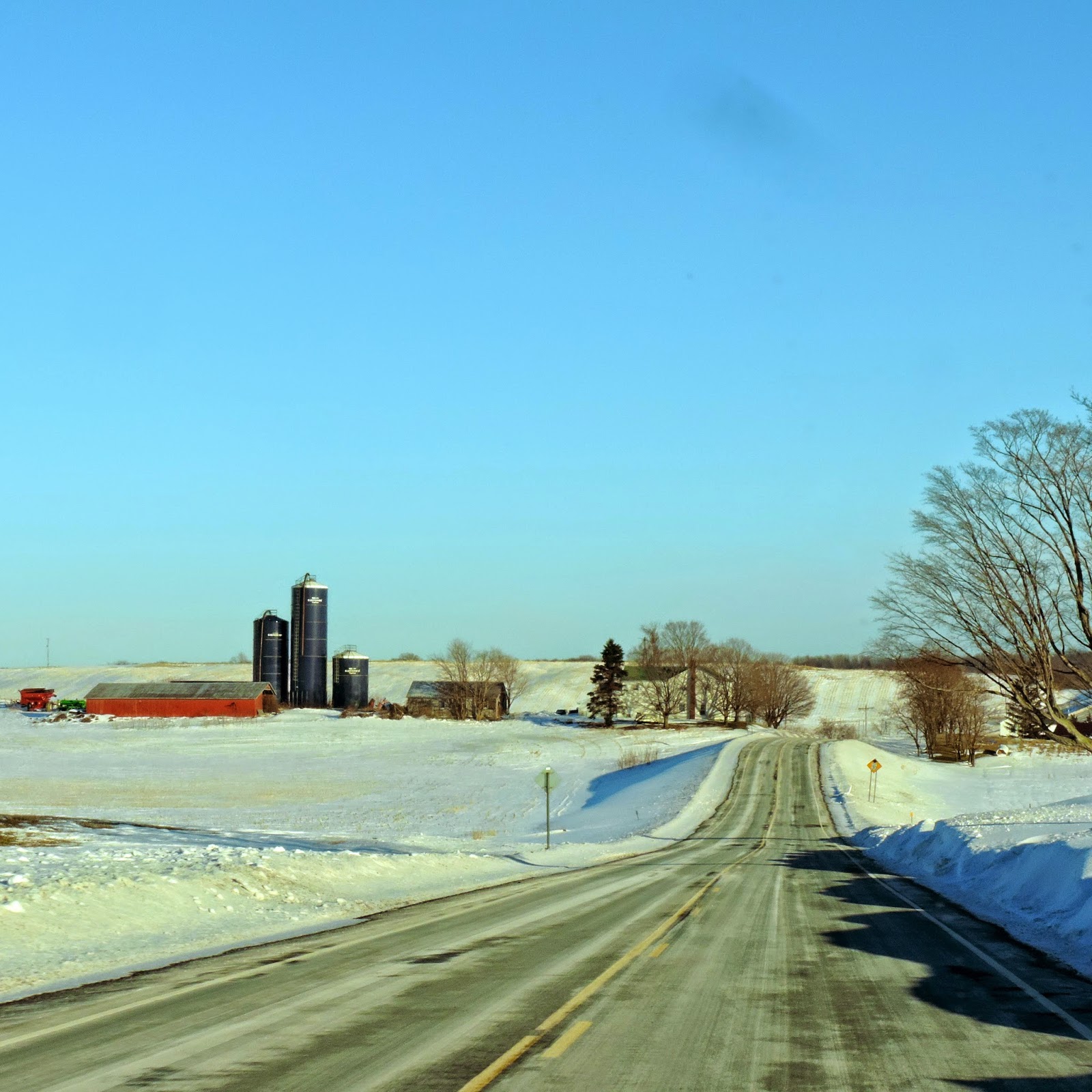
They also can be seen at airports, on slight rises in barren fields, and sandy shorelines and sand dunes. We have a lot of open farmland in this area so thought we might have a chance of spotting one. These types of land features are similar to their summer breeding grounds of tundra-like exposures.


They spend their summers in the arctic circle way up north, and in late fall, if their food source is diminishing, the immature owls (one and two year olds) head south to southern Canada and the northern United States.


There was another irruption of snowy owls this year. An irruption is a "dramatic, irregular migration of large number of birds to areas where they are not typically found". Bird Irruptions


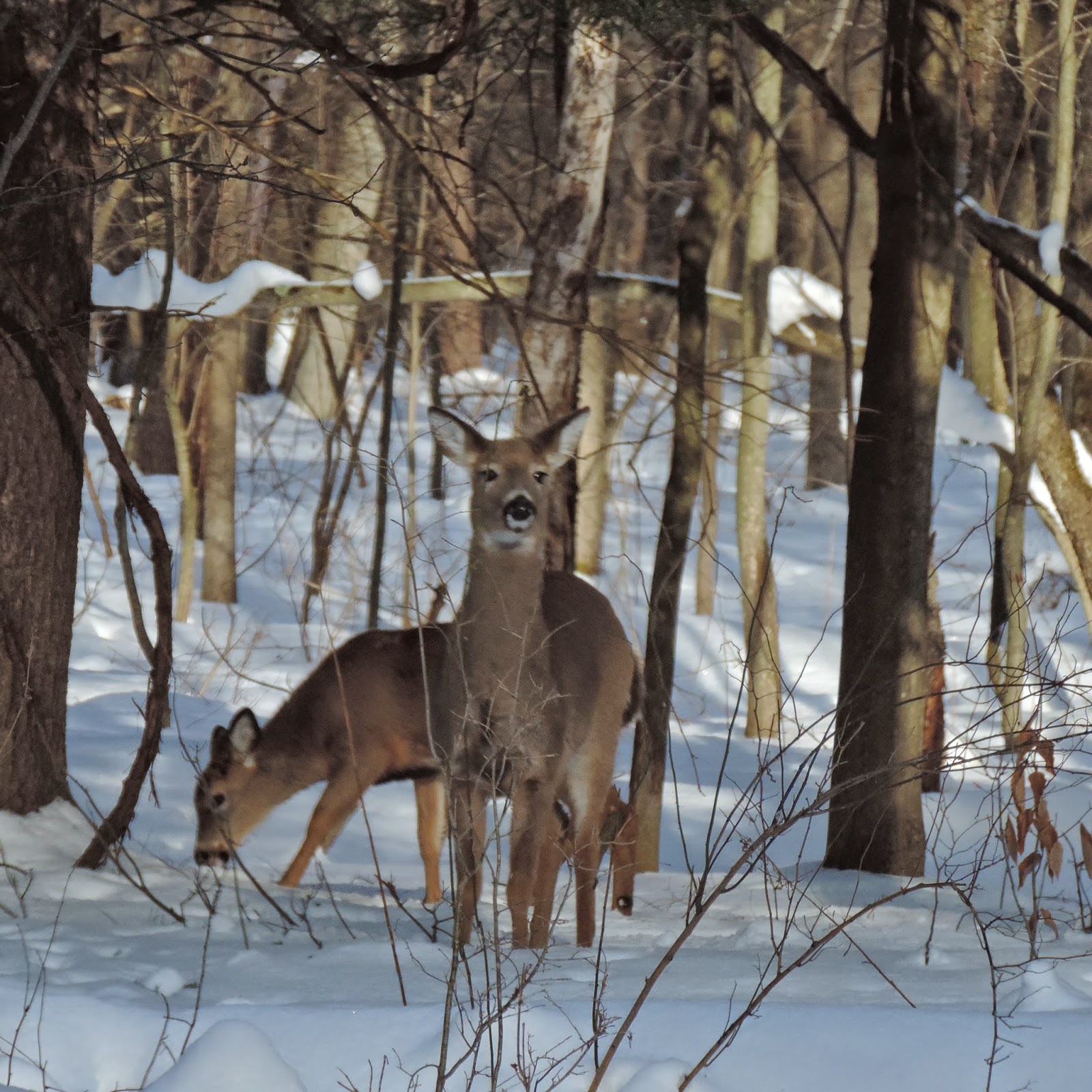
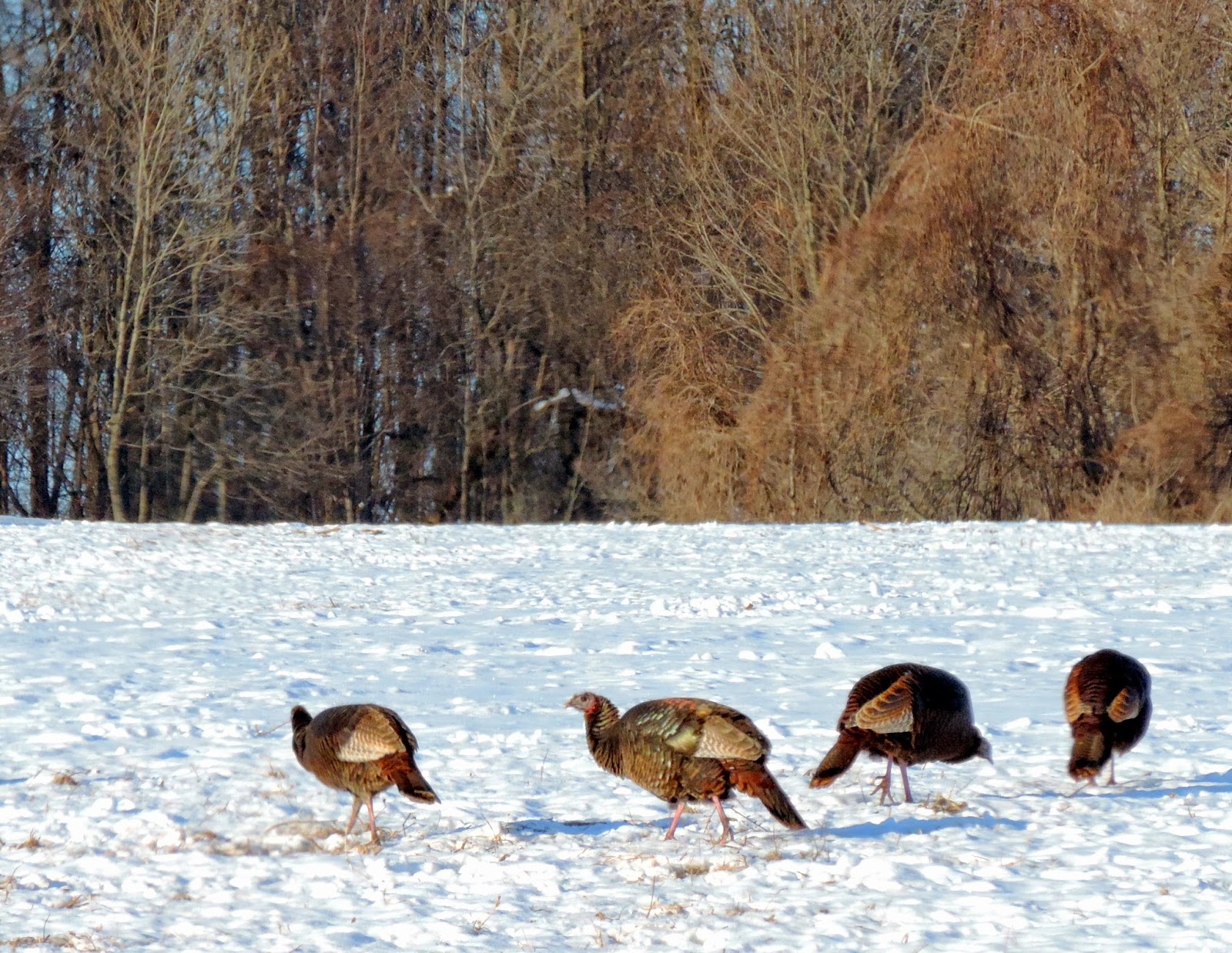
Even though we were unsuccessful at spotting a snowy owl, we did see some other wildlife.


Wild Turkeys


With all the farmland around here I know there has to be some snowy owls somewhere.

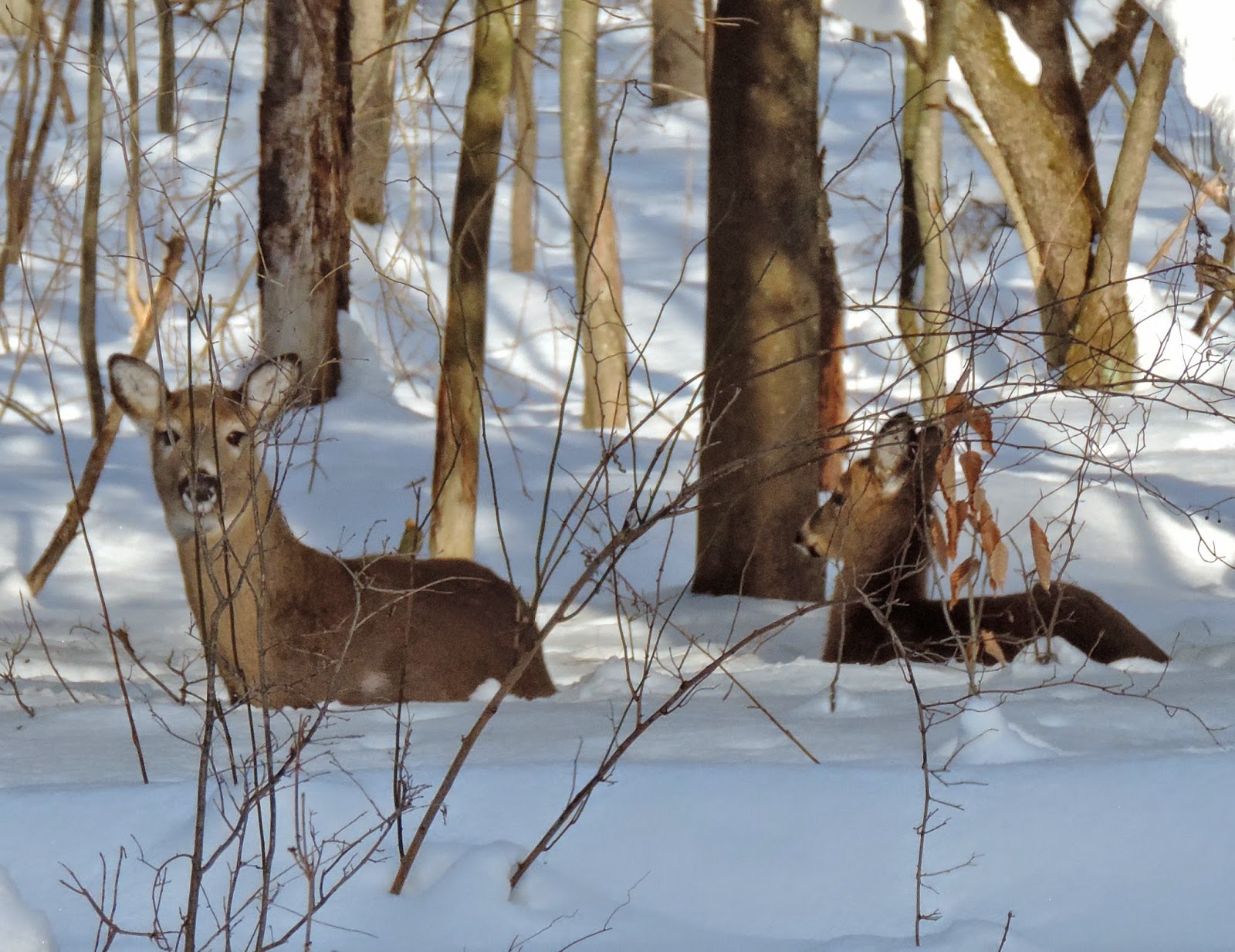
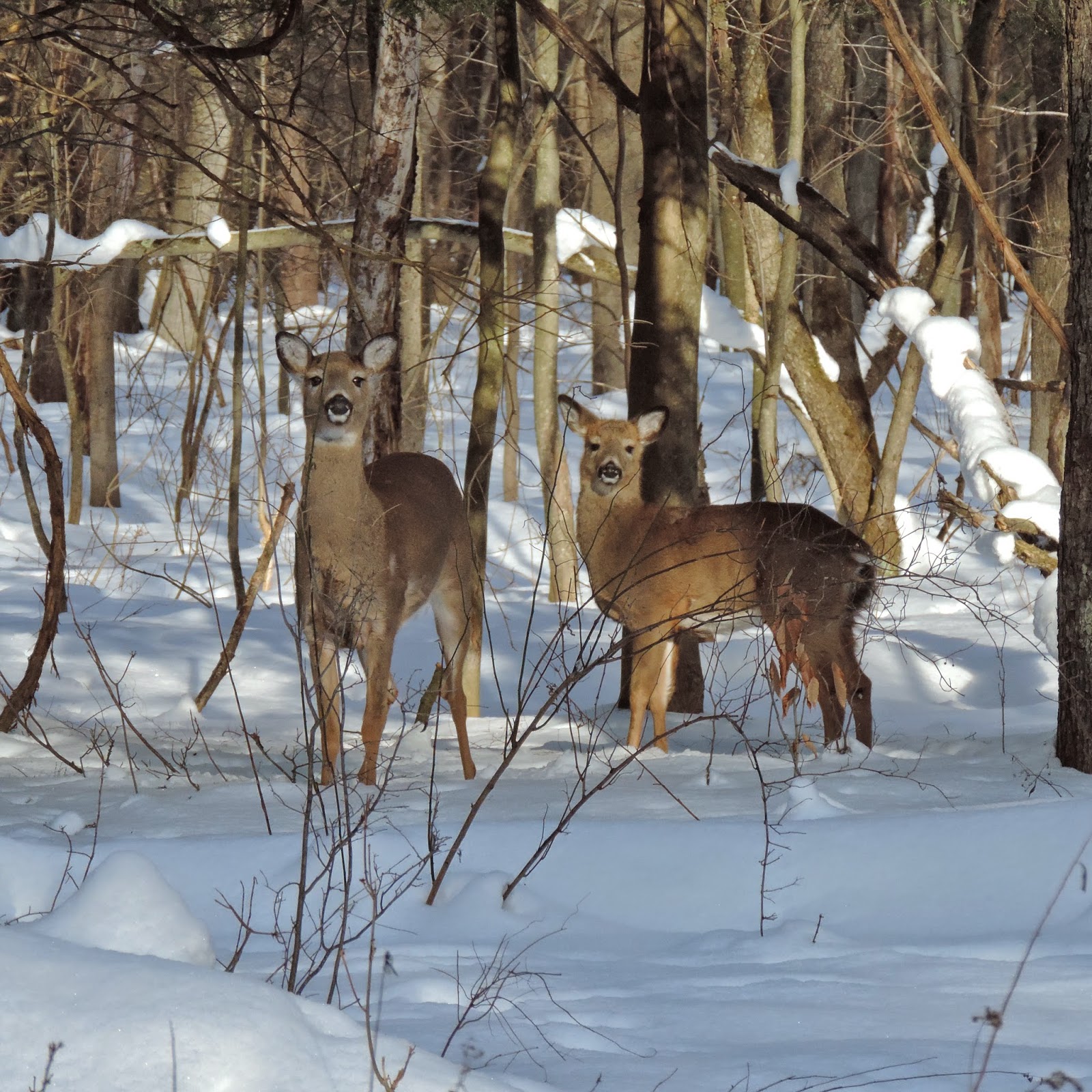
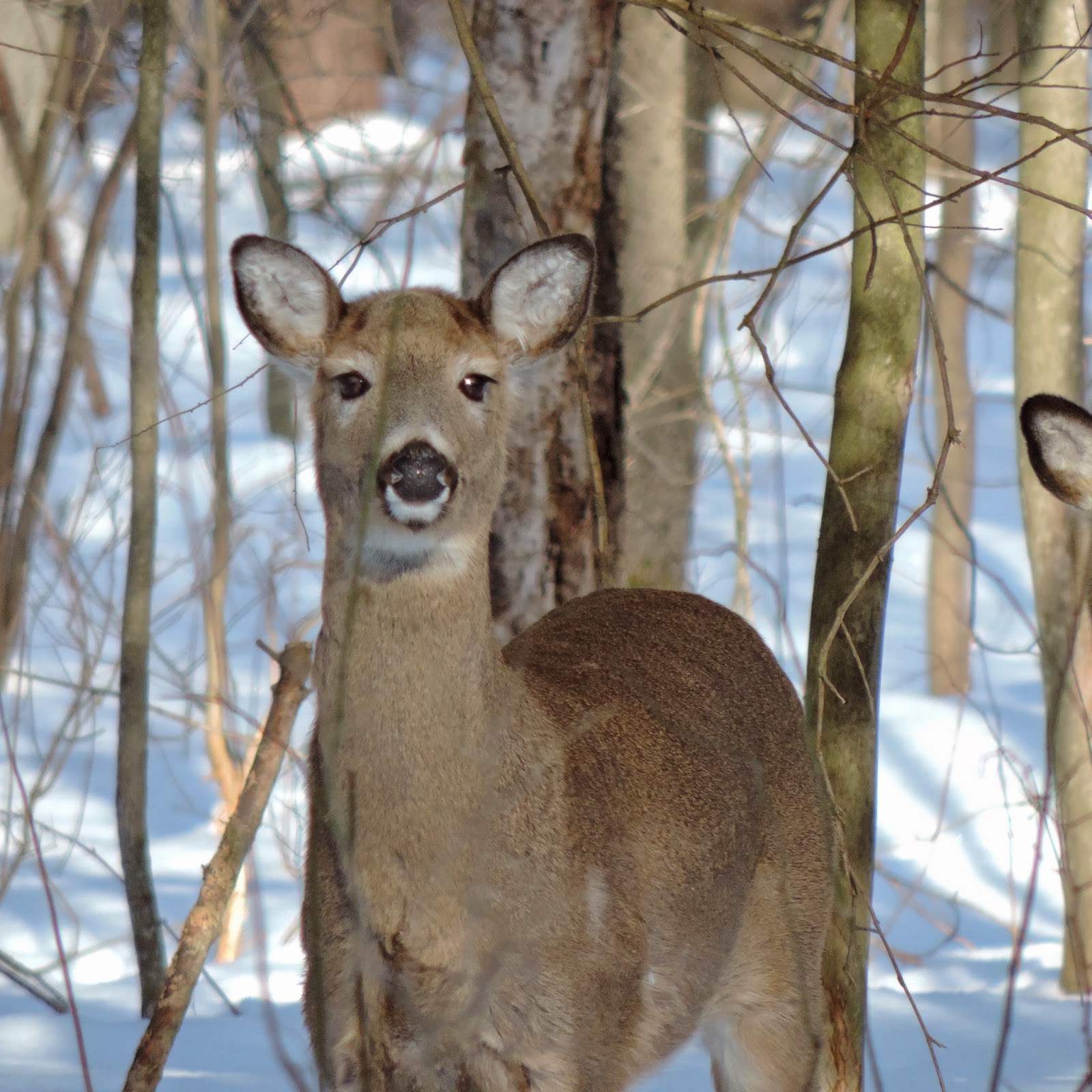
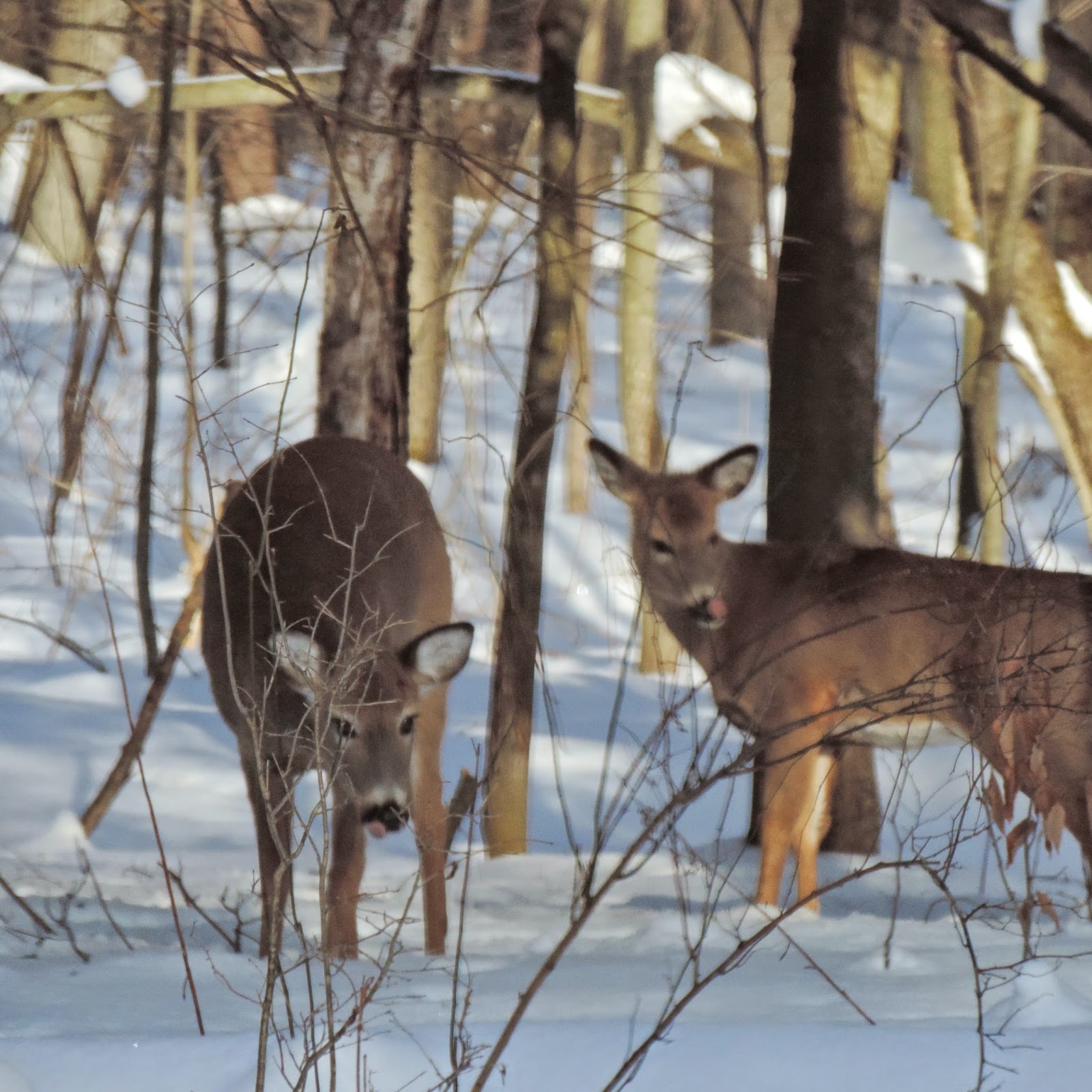
Here is a short video I took of the deer we saw at Selkirk Shores State Park, Port Ontario, NY.


Hope you are having an enjoyable winter!

Feel free to add your comments~


Sunday, February 16, 2014

Are We There Yet???

Tree Sparrows soon to be heading north
to their breeding grounds in the Arctic.
Sometimes we can be as impatient as children riding in a car. Yes, we're (some of us) anxiously waiting for Spring. And others are still having fun in the snow--- shoveling being one of the regular outdoor activities.


Well, in a few weeks spring will be here and then we'll be complaining about the dirty piles of snow, the rain, the freezing rain, and mud. Lots of mud. All this snow is going to have to go somewhere when it melts. Some areas might see flooding especially if it melts fast and doesn't have time to seep into the ground slowly. Some areas will welcome it because of past droughts. And most people will be glad to see and hear the sights and sounds of spring.


Canadian Geese on the Oswego River, Phoenix, NY
I would say that we haven't had a very extreme winter here in Mexico, New York. Our snowfall is about average. Probably somewhere around 150" to date. We don't get all our snow at once. It will snow, melt some, snow some more, settle, and sometimes there is a thaw in there, then more snow. We've missed out on most of the larger snow storms that fell in Watertown and Adams, NY.

Here are snow totals as posted by Jim Teske (from the Syracuse News Channel 9) for this season through the end of January. Notice the snow totals for Redfield, NY - 284"! I heard that they have now reached at least 25 feet! We're about halfway between Oswego and Redfield so I'm guessing we had about half of what they got - 150+/-". And those totals do not include the February totals.


It won't be long now before you will see the first of the migrating birds returning to the area. Actually a few people in the area have seen robins. Many of the male bird species return back to the area before the females to scout out for nesting sites. One of the first birds to return to our Central/Northern New York area are the red-winged blackbirds and the male bluebirds, and then after them the robins, orioles, hummingbirds, and the wood warblers. Millions of birds will fly through the Country, and some might stop in your backyard for water, fruit, berries, seeds, bugs, and a rest. Some might stick around for a few days or so and then continue on their journey further north. You might only see some species for a few minutes never to see them again. People think that birds fly south for the winter because it's too cold up here for them, but it has more to do with the length of the day, and what food supplies are available.

Here is a link to a Spring Migration Chart. Select an area on the map and click on it and it will show you some birds that frequent your area and their expected date of arrival. Depending on the species it might just pass through your area and head further north. There is also a search box on the upper left corner of the page in which you can type in any specific bird if it's not listed on the pages. You can also click on any bird on the page and it will show you a map of that bird's migration route.

Onondaga Audubon Derby Hill Bird Observatory. Northern Oswego County, and specifically Mexico, NewYork, is a designated site for the spring migration of many bird species. It is most noted for the hawk migration. We have a area in our township called Derby Hill Bird Observatory. This is one of the most important areas in the Northeast United States for watching the hawks in their spring migration. This area is located off the southeast corner of Lake Ontario. Because most migrating hawks fly in the thermals they use less energy. The thermals do not occur over large bodies of water. When the birds are flying north in the thermals they come to Lake Ontario and follow the shoreline northward. Derby Hill is at the eastern end of the Lake and from this point the birds will head north. At this observatory site there are two hawk lookouts, a north and a south, depending on which way the wind is blowing. There is also a separate platform for watching migrating waterfowl and wetland species.
Immature Bald Eagle

The hawk watch season starts the beginning of March and runs through the end of May. April is the best month with the most sightings, and up to 20,000 Broad-winged hawks can be seen in a single day. The average count of raptors for the season is over 40,000.  If you have the chance to visit our area from March through the end of May you might want to stop by to see if you can catch some glimpses of these great hawks.

They have been counting and recording their numbers since the early 1960's. Since 1979 a professional hawk counter has been employed. The data has been entered into a database maintained by the Hawk Migration Association of North America.

Here is the link to the database: Hawkcount. When you open this page, select Derby Hill from the drop-down box in the center of the page where it says "Select Count Site", then click on "Go to Site" on the right of that box. As of today's date of 2/16/2014, there are no numbers in the database because the count hasn't officially begun. Here is some more information on Derby Hill Observatory: What is Derby Hill?


American Bald Eagle

Bald Eagles in Oswego County. We had heard reports of people seeing Bald Eagles on the Oswego River in Phoenix, NY. Lake Ontario had a lot of ice around the shoreline, and at one point there was an ice jam in the river at Oswego and the Eagles were coming up the river looking for open water to fish for food. We drove around hoping to photograph some and spotted a few on the other side of the river in trees. There have been several reports of people seeing them in that area along the river. My husband, Ted, did manage to get these two pictures of the Bald Eagle and the Immature Bald Eagle. We had seen some others there, but they were either on the move or too far away for us to photograph them.


Lead Poisoning in Bald Eagles. I recently read an article the New York State Conservationist (Feb 2014) by Kevin Hynes. In this article he describes how eagles will hunt for rodents and other small mammals, and will eat carrion (dead carcasses) from deer that have been discarded by hunters. This happens when the water areas where they usually fish are frozen. The Department of Conservation (DEC) has been finding dead eagles every year in winter and early spring. The cause of this might be from fragments of lead bullets. It is stated in the article that solid copper bullets might be a better choice for hunters. Here is the article in its entirety. Lead Poisoning in Bald Eagles

Three squirrels (two on the feeder, one on the ground) and a Cardinal waiting patiently for his turn.


Male Northern Cardinal


On a closing note I would like to mention the Snowy Owl Irruption. An irruption is a dramatic, irregular migration of large numbers of birds to areas where they usually are not found. Several of my friends have spotted these magnificent birds, one of the largest owls in the world (I have not seen any this year, but have seen some in previous years). If you want to see them you have a likelihood of finding them either on the ground, on a pole, on top of a building or sitting on something else like a hay bale. You usually are not going see them in trees. They like open spaces. Where they live in the tundra there are no trees growing so they are used to flying very far to locate food. Their primary food is the lemming which are about the size of a hamster.


Here are some news links to the Snowy Owl Irruption:
National Geographic: What a Hoot: Snowy Owls Make Rare Southern Appearance

AccuWeather.com:Snowy Owl Invasion (this site also show a map of where the sightings have occured)

PBS- Nature: Magic of the Snowy Owl (video limited to US & territories). This is a wonderful video on the Snowy Owls (long, but well worth it 53 minutes): PBS Video: The Magic of Snowy Owls


One of my photographer friends, Eric Dresser (from Eric Dresser Photography) had the opportunity to photograph some of the Snowy Owls this year and he gave me permission to share some of his photos with you.


Thank you Eric Dresser. Here is a link to Eric's website if you would like to see more of his images: Wildlife Photos by Eric Dresser


*     *     *      *      *      *      *      *      *  


And on the horizon. . . .Spring is not too far away!


Hope you enjoyed this issue of my blog. 
Feel free to leave a comment, and
Thanks for taking the time to read it.